The price to save Mirror Pond

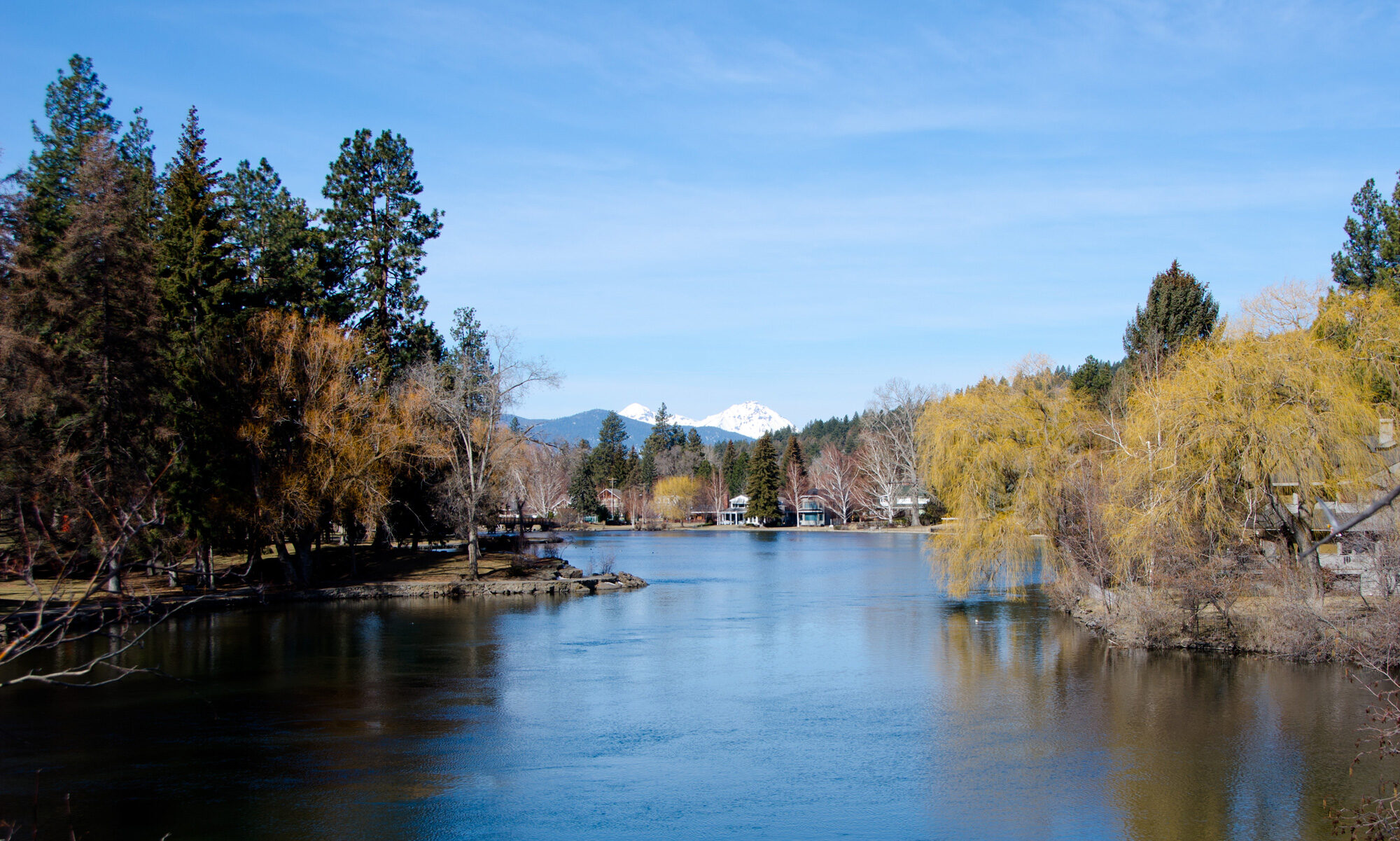
Bend’s Mirror Pond is more than a pond. It is an arresting symbol of the city that should not be lost. As the years go by, the pond is becoming a mudflat. Sediment has settled behind the dam.

Geese may soon waddle rather than swim. Paddles may be used to push, not row. Bend’s butterfly is becoming a caterpillar.

The effort to fix the pond has become as muddied as the pond.

The consultant hired to evaluate alternatives has been let go. There is no money for an analysis weighing alternative solutions, costing maybe $500,000 — let alone a fix which might add another $5 million.

Spending some money on a study for alternatives seems inescapable. Without a rigorous analysis, the state or the federal government would likely refuse approval of a fix. Without an analysis, chances of getting the federal government to chip in any money would be lost.

Where will the money come from?

The city of Bend doesn’t have it. The Bend Park & Recreation District may be doing relatively better financially, but it would be hard to argue that pond upkeep is part of its mission.

So the city is looking at creating a taxing district, perhaps putting it before voters in November 2012.

We’d vote for a taxing district to pay to dredge Mirror Pond. But is that what the tax would pay for? Would the tax sunset? Would the taxing district create a permanent, new bureaucratic fiefdom?

Some have proposed that the natural, permanent fix would be to remove dams and let the Deschutes resume its course. The pond would become a river again. There likely would be less need to come back in another 25 years and dredge again, though Bend’s centerpiece would be gone.

A taxing district for Mirror Pond has a chance, but only if voters know what they are paying for.

Source: The Bulletin

OBNA General Meeting: November 11, 2011

Members were noticed approximately two weeks prior via general mailing.

Five guests from Riverwest also attended the meeting.

John Kelly discussed the issue of fencing along the river frontage. This is considered an issue of safety for children and pets as well as security for property owners. He has secured signatures from a number of residents along the river who support the allowance of fences. Currently the City requires a $3000 fee to review a request for fencing. This is the same amount which is required for a full design review.

John Kelly plans to approach the city requesting that fences be allowed subject to design and placement standards developed by the city planners and that the fee be reduced or eliminated. Tom Green, city councilman, agreed to present this to council. No objections from members were voiced.

There was a discussion of the proposed Galveston Street Project. More info on this can be found on the city website under public works projects

The issue of smoke drifting into residences from outdoor smoking at local businesses was discussed.

Councilman Green, who sits on the Mirror Pond Management Committee, discussed progress or lack of regarding solutions to solving the silting of the pond. . The Steering committee has not made a decision as to how to proceed. Funding is the main issue at this point.

Spencer Dahl has agreed to update the Neighborhood website. Spencer and several of the Board Members will attend a training session at Alpine Internet Solutions.

A Board Election was held: John Kelly, Mark Weers, Bob Almquist , Ken Cooper, Spencer Dahl were reelected. Jan Gifford, Brett Yost, and Julio Lindsay were elected.

The meeting was adjourned at 2:30 pm.

The Board will meet Wednesday, December 7 at 6:00 pm at McMenamins in the Smoke Room.

The Agenda will include: Communication, Duties of Board Members, By Law Revision, and future goals and objectives of the OBNA.

New tax for Mirror Pond?

It might take a new — and possibly permanent — tax to prevent Bend’s 101-year-old Mirror Pond from becoming speckled with mud flats.

The manmade water feature, located downtown along Drake Park, has sedimentation problems caused by silt flowing down the Deschutes River and settling on the bottom of the pond.

After several years of false starts and delays, officials thought they were closing in on a possible fix to the problem. But as a consortium of local businesses and governments prepares to sign a contract to fully study the various alternatives, it has discovered another snag.

It doesn’t have any money. Not even enough to pay for the study.

“We’re at a juncture we knew we were going to come up against,” said Michael McLandress, the project manager hired to oversee the current Mirror Pond alternatives analysis. “This is the albatross we’re all trying to negotiate with. How do we find a funding mechanism that will create long-term sustainable funding for Mirror Pond?”

Now discussions have reverted to forming a special taxing district that would collect property taxes to pay for the upcoming study. That money would also be used to pay for whatever fix the study calls for, in addition to setting money aside for future Mirror Pond maintenance and projects.

“It’s still very early in the discussion stages, but the idea would be to have a Mirror Pond tax district on the May ballot,” McLandress said. “We are just trying to determine if that’s even feasible at this stage.”

McLandress was hired last year after the city of Bend, the Bend Park & Recreation District, Pacific Power, William Smith Properties Inc. and the nonprofit Bend 2030 all decided to pool some resources to do a proper analysis of what should be done to Mirror Pond.

That analysis would piggyback on a 2009 study and also include wide-ranging community input that would be combined with a scientific analysis of various options to remove sediment from the pond.

Those options could include anything from leaving the pond as it is and allowing it to fill with sediment to removing the Pacific Power dam near the Newport Avenue bridge and allowing the river to flow free.

Previous discussions have focused on dredging the pond, which was last done in 1984 at a cost of $312,000. The 2009 study estimated any future sedimentation solution could cost anywhere from $2 million to $5 million.

After receiving two proposals over the summer for a new alternatives analysis, the group decided it would hire Cascade Environmental Group of Portland. Though contract negotiations are ongoing, the current estimated cost of this study is around $540,000.

Even though the analysis was planned to be broken into two parts — with the first phase costing about $200,000 and the second coming in around $300,000 — McLandress said “it looks like we don’t even have the funding to get the entirety of the first phase going.”

One option he is looking at, however, is breaking apart the first phase into two more segments, with the first being the public outreach and community involvement portion. By doing that, he said, the project can at least continue to move forward while officials look for funding sources.

“This is the furthest we have ever gotten in this process,” McLandress said. “(But) there’s a budget there that we don’t have.”

Source: The Bulletin


New concepts for Miller’s Landing

Dozens of Bend residents turned out at an open house Thursday, taking an opportunity to weigh in on plans for the city’s next riverfront park.

The Bend Park & Recreation District is on an aggressive schedule to begin construction on the park at Miller’s Landing, across the Deschutes River from McKay Park, by next spring or summer.

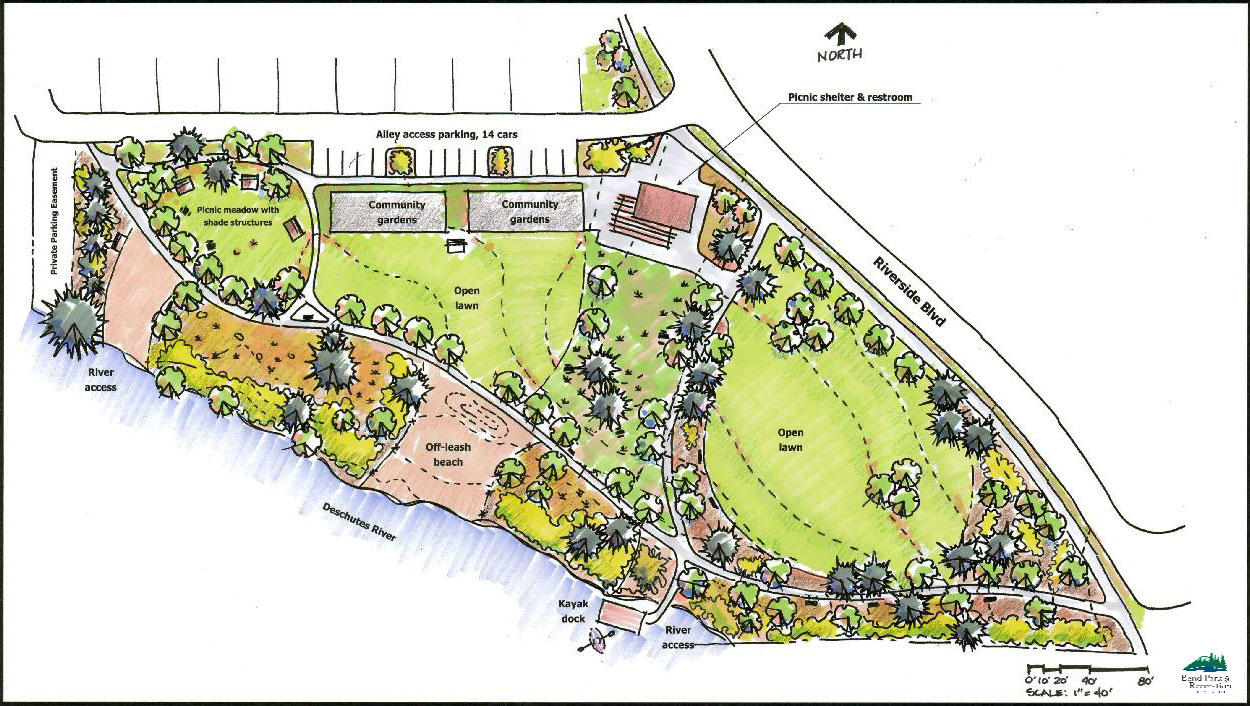
Thursday, the district invited the public to view three concept drawings of what the nearly five-acre park could include and to offer their feedback.

Robin Laughlin, project manager for the district, said the public has expressed a preference for a lower-intensity park than McKay Park, the grassy expanse just downstream from the Colorado Avenue spillway popular with summer river floaters. All three plans call for much more limited river access than at McKay Park, with native plants covering the majority of the area along the water’s edge.

Laughlin said three concepts — plans A, B and C — reflect diminishing degrees of development. While plan A features community gardens, a picnic shelter and three river access points, including an off-leash dog beach, plan C has only two small river access points and is dominated by native plants and grassy areas.

All three concepts include public restrooms, the feature most requested by participants at prior public input sessions.

No plans for skatepark

Despite extensive lobbying by skateboarders earlier this year, none of the concepts include a skate park. Bruce Ronning, the district’s director of planning and development, said the district is actively looking for a place to locate a new skate park on the west side, but doesn’t believe it would be a good use of limited riverfront park space.

Laughlin said the district is likely to mix and match different elements from all three concepts in developing its official master plan this winter.

Two design elements captured much of the attention from participants in the open house, who left their comments on sticky notes tacked up next to images of the three concepts: the off-leash beach included in Plan A, and parking in the alley behind Gilchrist Avenue, included in plans A and C.

Both plans were unpopular.

Bob Almquist, who lives on Gilchrist Avenue, said while he has no problem with dogs, they don’t mix well with the park’s focus on boating and floating. A frequent kayaker, Almquist said he’s vulnerable to being tipped over by swimming dogs when he’s in his boat. Off-leash dogs are unlikely to remain on the designated beach, he said, and are likely to cut through the proposed stands of native plants, damaging the plants and creating erosion of the banks.

Almquist said he’s mixed on parking along the Gilchrist Avenue alley. While a parking lot off the alley could slow traffic, he said, it could also create conflicts with the walkers and cyclists who use the alley.

Dagmar Eriksson, who lives on the bluff overlooking the park site, said she leans toward plan B as the best way to both provide river access and preserve riparian areas. She said she often sees boaters who launch or land from the site damaging the banks by pulling their boats through the bushes along the banks, and would like to see designated launch sites at the future park.

Eriksson said she thinks an off-leash area would create conflicts with other users of the park. Across the river at McKay Park, too many dog owners already let their dogs run free and fail to pick up their waste, she said.

One participant left a note suggesting the development of an off-leash beach doesn’t go far enough.

“This should be a dog sanctuary,” the note read. “The anti-dog people are giving Bend a bad name.”

Eriksson and Almquist both said they expect the park district will do a good job, and that any park is a more welcome addition to the neighborhood than the residential development that had been proposed for the site just a few years ago.

In 2006, Brooks Resources and the Miller Lumber family were given approval to build 37 townhomes on the site. Economic conditions stalled the project, and late last year, the Trust for Public Lands purchased the property in order to transfer it to the park district.

“This is just frosting on the cake, the fact this is a park and not condominiums,” Almquist said.

The park district is continuing to accept public input on the Miller’s Landing project.

Source: The Bulletin