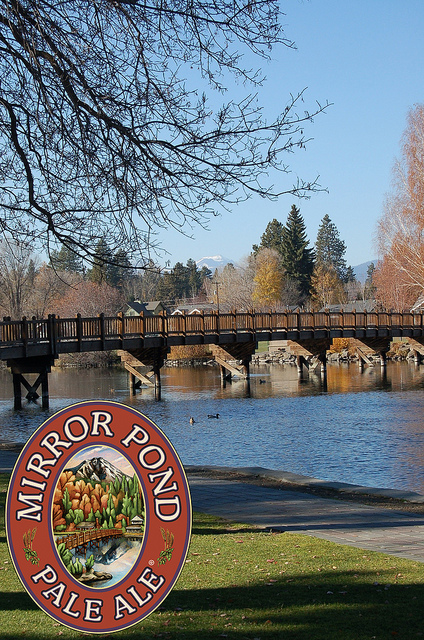
Landmarks from Deschutes Brewery.
Old Bend Neighborhood Association
At the heart of Bend, Oregon
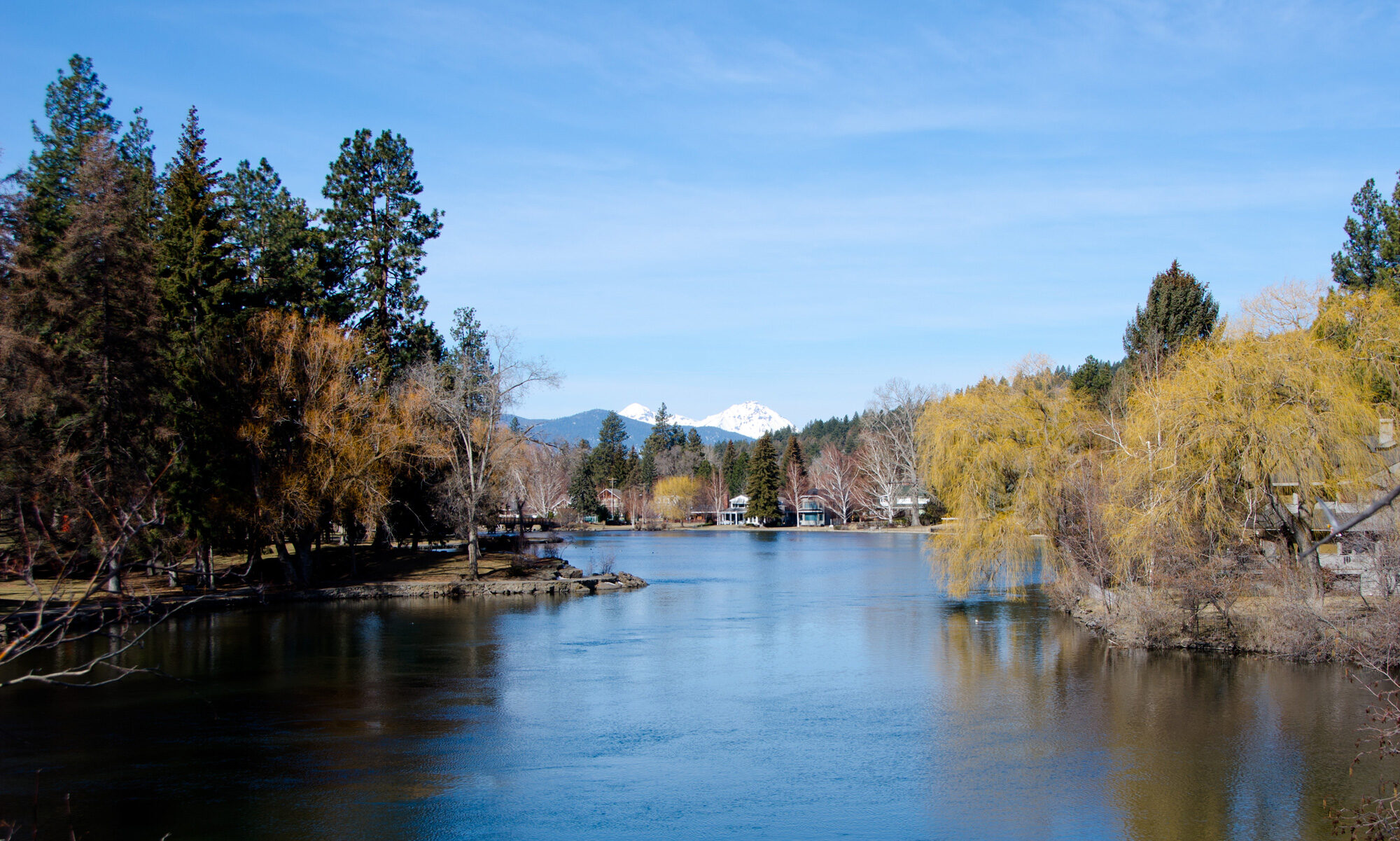
Landmarks from Deschutes Brewery.
Yes, yes, yes to the idea of dredging Mirror Pond first and then trying to figure out the long-term picture later.
It was refreshing to hear that notion stated so directly by members of the steering committee working on this question.
“Something has to be done to remove the sediment immediately, regardless of what we do in the long term,” said Matt Shinderman, Oregon State University-Cascades Campus natural resources instructor.
“It’s kind of a two-stage process. The first is to dredge the pond, and the second is to do a longer-term study of what needs to be done to the pond,” said Don Horton, executive director of Bend Park & Recreation District.
Yes, indeed.
Earlier plans to spend $500,000 on a study of options faltered because the price was so high and no one had the money to pay for it. Estimates to dredge the pond range from $2 million to $5 million.
The group is awaiting citizen response from an upcoming park district survey before deciding if it should ask voters for a one-time bond issue to dredge the pond, or the formation of a permanent special taxing district.
A permanent taxing district is a complex question. Voters would need to consider whether they want to continue to carve out special tax obligations as they have for other things — such as the library and sheriff’s office — that previously were paid for by the general fund. And, voters wouldn’t know exactly what they’d get in the future with that obligation. Recommendations to return the river to its natural state, for example, would be far less popular than preserving the town’s crown jewel by dredging.
We favor a simple bond measure, because we think voters will support something they value and can understand.
Source: The Bulletin
In 1906 the Marmot Dam was built on the Sandy River near Mount Hood. Nearly a century later, PGE decides to remove it. But will the tons of sediment built up behind the dam harm the river downstream once the structure is removed? The National Center For Earth Dynamics at the University of Minnesota and other experts weigh in. See what happens as the Marmot Dam is removed.
First Broadcast: 2008
Producer: Vince Patton
Videographers: Todd Sonflieth, Nick Fisher
Editor: Nick Fisher
Audio: William Ward
Field Producer: Milt Ritter
Video courtesy of: Portland General Electric
Photos Courtesy of : US Geological Survey
Appeared in episode: Marmot Dam Removed, Fire Tower, Ice Worms
Video Extra: Time Lapse Video: Coffer Dam Face
Source: OPB: Oregon Field Guide
First things first: Mirror Pond needs to be dredged. At least that’s what the people studying the sedimentation problem in the pond say.
Initially, officials wanted to analyze a range of possible fixes to the silt problem in Mirror Pond that included everything from doing nothing to removing two dams and allowing the Deschutes River to flow freely.
After learning that such a study would cost $500,000 and that no one was willing to pay for it, the steering committee created to guide this effort shifted its focus.
“Something has to be done to remove the sediment immediately, regardless of what we do in the long term,” said Matt Shinderman, who sits on the committee and is an Oregon State University-Cascades Campus natural resources instructor. “It’s already starting to get to a point where you’re going to have extensive mudflats and potential wetland vegetation coming in.”
Once that vegetation takes root, he said, it could become a lot more difficult to do any work in the pond, because federal wetland protections create more regulatory hurdles.
Silt has been accumulating at the bottom of Mirror Pond ever since Pacific Power & Light Co. built a hydroelectric dam near the Newport Avenue bridge in 1910. The last time it was dredged was in 1984, at a cost of $312,000.
The latest cost estimates for dealing with the pond’s sediment problem came in between $2 million and $5 million. Those figures were from a 2009 study.
As with the $500,000 alternatives analysis, no one has offered to pay for dredging Mirror Pond. The group looking into the issue includes the city of Bend, the Bend Park & Recreation District, Pacific Power, William Smith Properties Inc. and the nonprofit Bend 2030.
Two funding ideas have been floated recently. One is to form a permanent special taxing district. The other is to include a Mirror Pond fix in a one-time bond measure. In either case, it would be up to voters to decide.
Bend Park & Recreation District Executive Director Don Horton said the district is planning a survey that will ask residents if they would support either option for Mirror Pond. That survey, which is also gauging support for other possible bond measure projects, is expected to be sent out in a couple of weeks.
Horton noted that a bond measure would only provide a one-time source of funds, while a taxing district would supply money long-term. Like Shinderman, he said the immediate need is to dredge Mirror Pond first.
But Horton also highlighted the importance of an in-depth siltation study that would look at dam removal options and others — such as reconfiguring the shape of the pond — that would help cut down on the sedimentation.
“It’s kind of a two-stage process,” he said. “The first is to dredge the pond, and the second is to do a longer-term study of what needs to be done to the pond.”
— Reporter: 541-633-2160, ngrube@bendbulletin.com
Source: The Bulletin
The City of Bend is holding an open house to present changes related to the revised Special Events Permit. The meeting will be held Wednesday, January 25 from 2:30 to 3:30 p.m. in the City Council Chambers at City Hall, 710 NW Wall St.
As a result of feedback from the community, City of Bend staff began reviewing the Special Events Code as well as the internal process for scheduling and managing these events. A proposal was presented to the City Council on December 7, 2011 and, with their support, staff is initiating an open house for interested parties to discuss these proposed changes.
At the open house, staff will provide a summary of the permit process. After the presentation, there will be an opportunity for the public to voice questions, comments and concerns in an informal manner. As these changes will impact our residents, the City wants to ensure that potentially affected businesses and residents are aware of the proposed changes and that the public has an opportunity to provide feedback.