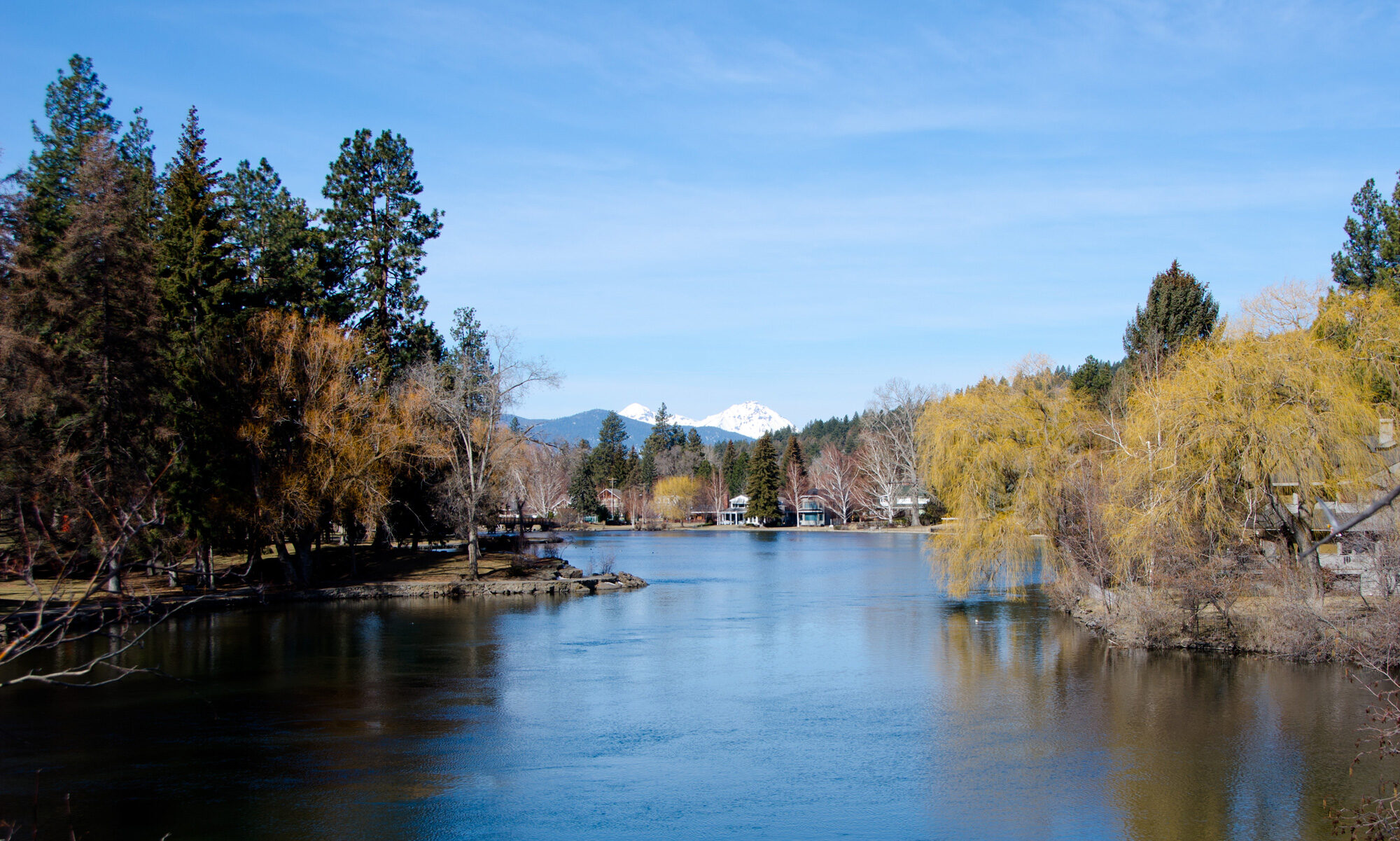
A number of recent articles in the local news media illustrate citizen concerns about the Mirror Pond sedimentation problem. Issues include lack of progress toward a solution, conflicting community values and lack of community involvement in the decision-making process. These concerns are valid, but the Mirror Pond Steering Committee would like to offer some clarification.
To begin, the river bottom at Mirror Pond is owned by different private individuals, Bend Park & Recreation District and Pacific Power. This information was not utilized in previous sediment management efforts, but ownership information is absolutely critical for determining key stakeholders and jurisdictional authority. Determining parcel ownership has required a significant investment of the committee’s resources.
Fragmented ownership and lack of clear jurisdictional authority for Mirror Pond complicate funding. The city of Bend does not have an ownership stake in the pond, nor is it responsible for the dams that regulate flows and sediment transport in the river. Similarly, while BPRD owns parcels that extend into the river, it does not operate dams. Both parties have committed funds and time to support the process, but those funds are not sufficient to “fix” Mirror Pond.
A recent letter to the editor suggested that Mirror Pond required a collaborative approach, something the MPSC has pursued from the beginning. Several committee members met with the Bureau of Reclamation, the federal agency responsible for management of Wickiup Dam, in an attempt to secure its participation. The BOR claims that Mirror Pond is outside its jurisdiction, citing a lack of scientific evidence linking management of the dam with increased sedimentation in the river. Without a federal legislative directive, BOR will not participate in the process.
The Pacific Power dam at the Newport Avenue Bridge is a barrier to downstream movement of sediment. Sediment transport is a normal function of rivers, and where there are dams, sedimentation will occur upstream. Advocates for a free-flowing river recommend dam removal and restoring the river to its natural course. I’m personally sympathetic to this idea, but reality in this situation is a bit more complicated.
Removing the Pacific Power dam eliminates Mirror Pond, but there is strong opposition to this idea. Additionally, dam removal shifts the sediment problem downstream to North Unit Dam, part of the federal Deschutes Project. Achieving an ecologically relevant, free-flowing river would entail removal of this dam as well, which would require federal legislation and addressing North Unit Irrigation District water rights. These options are theoretically possible but they greatly expand the complexity and expense of addressing the sedimentation issue.
There is some concern in the community that the MPSC has committed to a flawed process. To be clear, the MPSC has not made binding decisions — financial or otherwise — that restrict our approach to Mirror Pond. How the committee proceeds will largely be determined by the results of upcoming conversations with permitting agencies, specifically the Department of State Lands and Army Corps of Engineers, and by interactions with the community.
The committee has not pursued community engagement up to this point because there were substantial information gaps pertaining to permitting requirements, parcel ownership and costs for conducting appropriate studies to support the decision process. We now have that information.
The MPSC is committed to working with the community to determine the desired future condition for Mirror Pond, studying the alternative options for achieving that vision and developing funding mechanisms that will ensure long-term success. At this time the committee is shifting emphasis to community involvement, beginning with several questions pertaining to Mirror Pond on the upcoming BPRD survey. The MPSC will use information from the survey to develop a more comprehensive community outreach process that will inform the decision approach. We look forward to working with the community in the coming months.
— Matt Shinderman, on behalf of the Mirror Pond Steering Committee and Bend 2030.
Source: The Bulletin